Preferred Hotel Group

Increasing Mobile Engagement by 83% through strategic UX.

PROBLEM
Preferred Hotels & Resorts had noticed a lag in conversion and felt their engagement could be better but didn't know how to go about capturing users and converting them.
SOLUTION
Design an online experience that would both delight users and lead to a 25% reduction in cart abandonment.
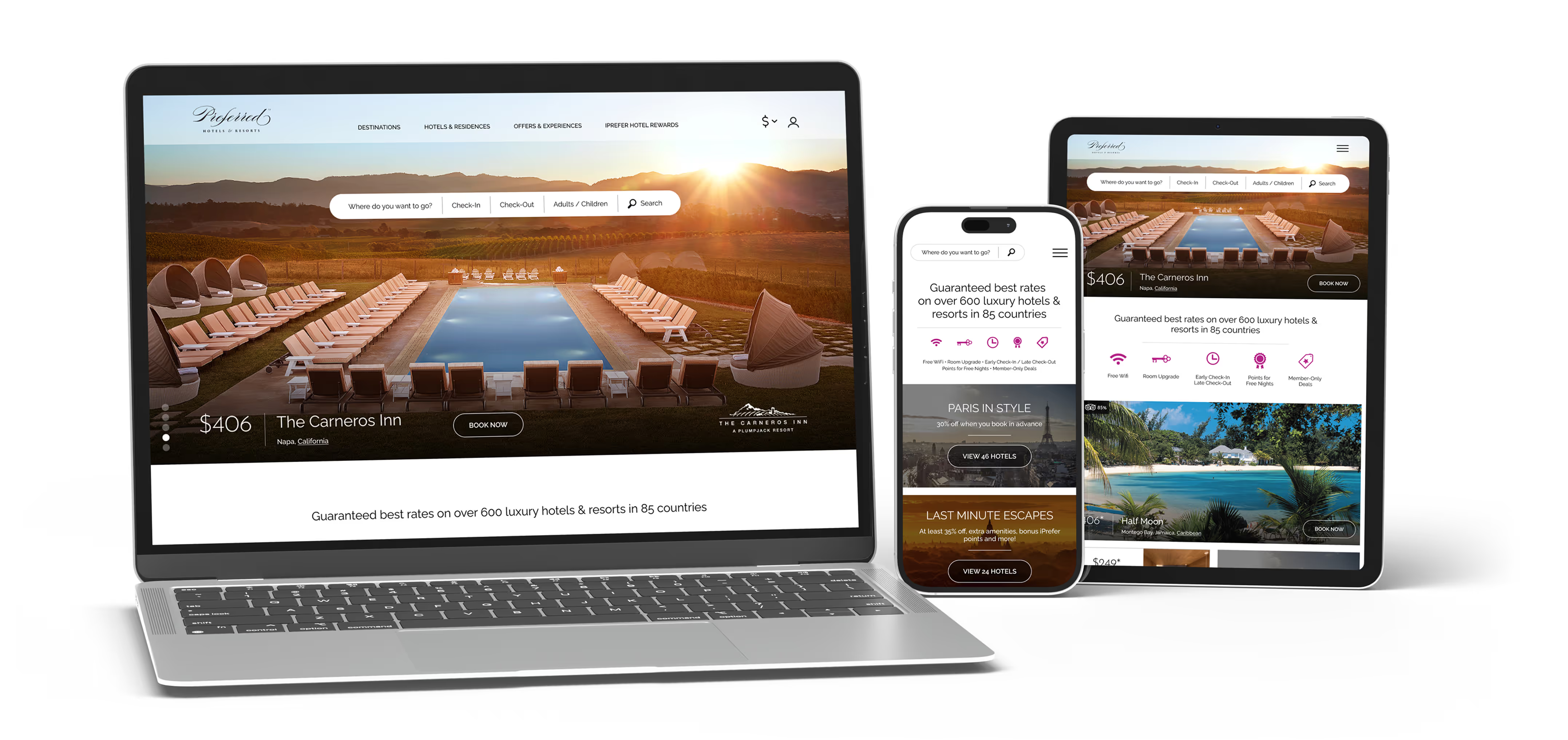
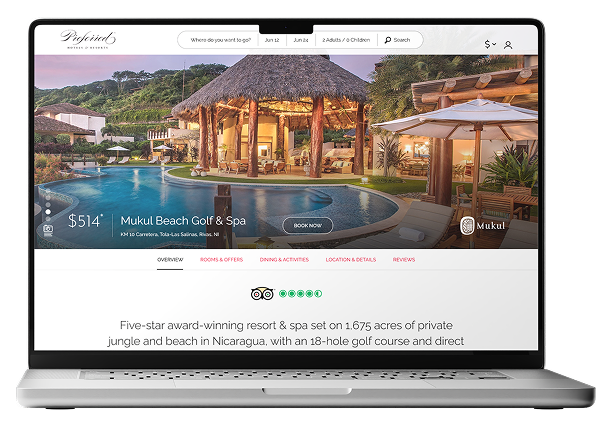
Laptop, smartphone, and tablet displaying a luxury hotel booking website with poolside lounge images and booking options.
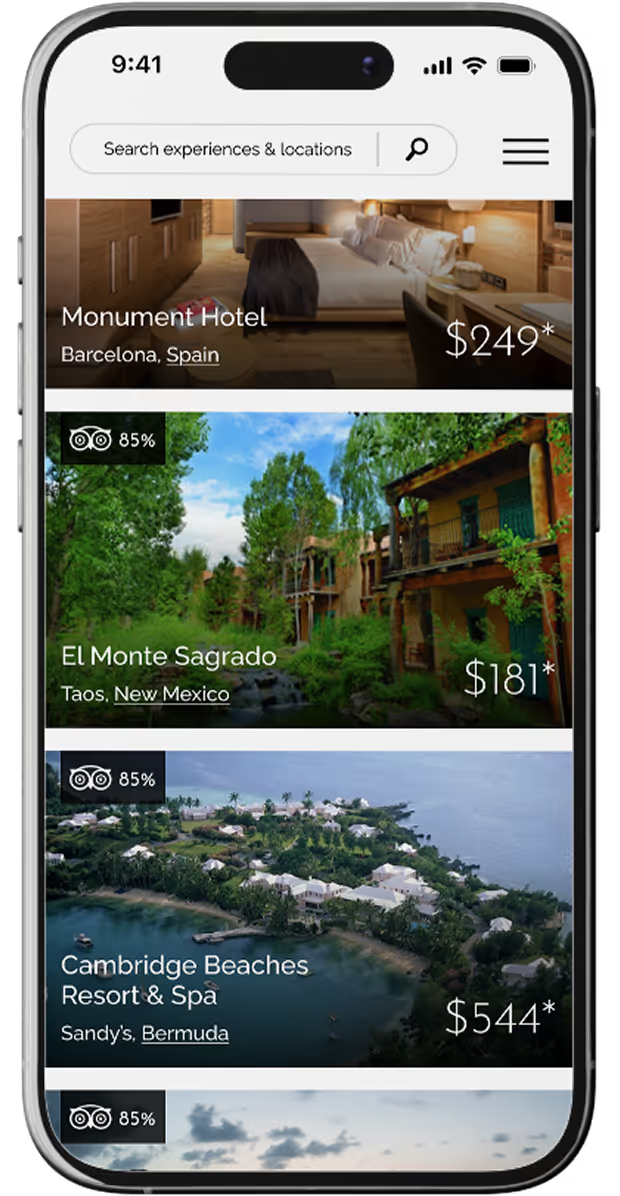
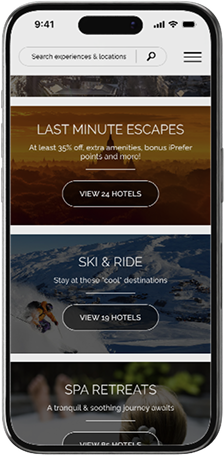
Mobile screen displaying a travel app with hotel listings including Monument Hotel in Barcelona for $249, El Monte Sagrado in Taos, New Mexico for $181, and Cambridge Beaches Resort & Spa in Bermuda for $544, each showing an 85% rating.
ROLE
Research
Product Design
TOOLS
Adobe
Figma
PLATFORM
Responsive Web
OVERVIEW

Who is Preferred Hotel Group?

Preferred Hotel Group is the world’s largest independent hotel brand. Unlike traditional hotel chains like Marriott or Hilton, Preferred does not own, manage, or operate its properties. Instead, it serves as a global soft-brand and marketing alliance for luxury independent hotels.

They are the leader in luxury travel representing over 650 distinct hotels in over 80 countries.  With over 6 millions enrolled members, it is one of the largest programs specifically for independent hotels.
Challenges

Cart Hemorrhage

Preferred Hotel Group experienced a high degree of cart abandonment compared to other luxury travel sites and wanted to increase conversion –a tricky task in online travel.

Flagging Mobile Engagement

Preferred Hotel Group saw a decline in mobile engagement in the rise of social media travel experiences and wanted to regain mobile users.

Brand Elevation

As the leader in luxury travel, Preferred Hotel Group wanted to elevate their brand to align with their standing in the world of online travel.
RESEARCH

The Luxury Travel Shopper

The first step was understanding who the luxury travel shopper is.  The client provided extensive research into who buys luxury travel and how.  This was confirmed by our own internal research.

Gender

Women dominate luxury travel bookings and engagement, accounting for over 61% of luxury travel interest and up to 80% of bookings.

Interactivity

Luxury travelers are highly influenced by digital experiences—40% of all luxury purchases are shaped by the quality of online interactions.

Life Cycle

Luxury travel shoppers visit an average of 277 different web pages before making a booking. It takes roughly 45 days before they make a purchase.

Browse on phone, convert on desktop

Most luxury travel is still booked on desktop computers rather than mobile devices. While mobile generates about 60–68% of online traffic for travel and hospitality websites, desktop accounts for approximately 62% of actual sales

Inspiration leads to intent

Whereas 95% of hospitality website users immediately go to the search function first, they are also drawn to curated experiences, visual inspiration, and the discovery process in early to mid process shopping.

How can we capitalize on emotional needs of the consumer throughout their journey?

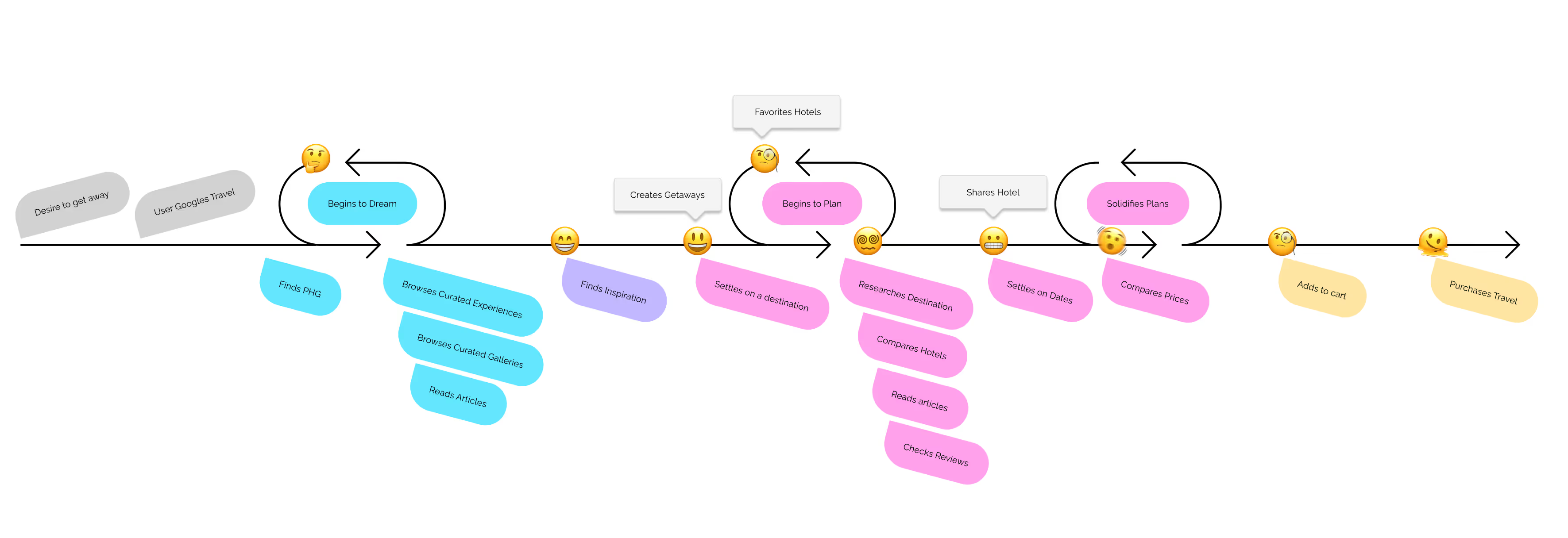
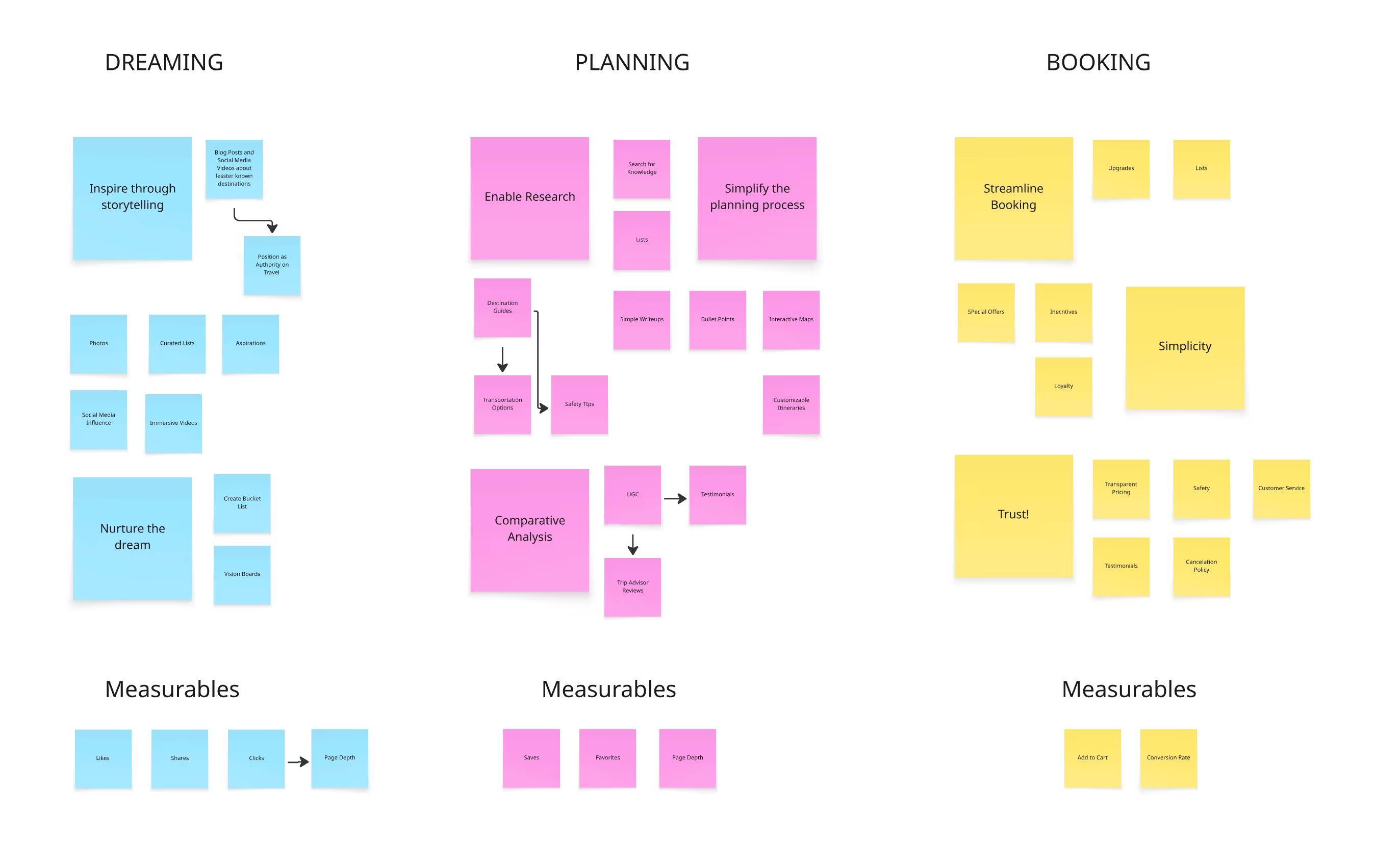
A lot of thought went into tactics that dovetail into the emotional needs of the consumer at various points within their journey.  Boards were created to capture any and all ideas about what was important and how we could convey it at various points.
Flowchart illustrating a travel planning process with stages: desire to get away, user googles travel, begins to dream with activities like finding PHG and browsing experiences, finds inspiration, settles on a destination, begins to plan with researching and comparing hotels, settles on dates, shares hotel, solidifies plans comparing prices, adds to cart, and purchases travel.
Miro board with three sections labeled Dreaming, Planning, and Booking, each containing color-coded sticky notes outlining goals, tasks, and measurables related to storytelling, research, planning processes, booking efficiencies, and customer trust.

Strategy

Meet them where & how they are

Understanding the life cycle of the luxury travel shopper was key to designing the Preferred Hotel Group web experience.  Mobile filtered up not only locations but also curated galleries and themed categories like “Last Minute Escapes” or “Spa Retreats” while desktop encouraged learning and conversion.
Dream
Learn
Find
Convert
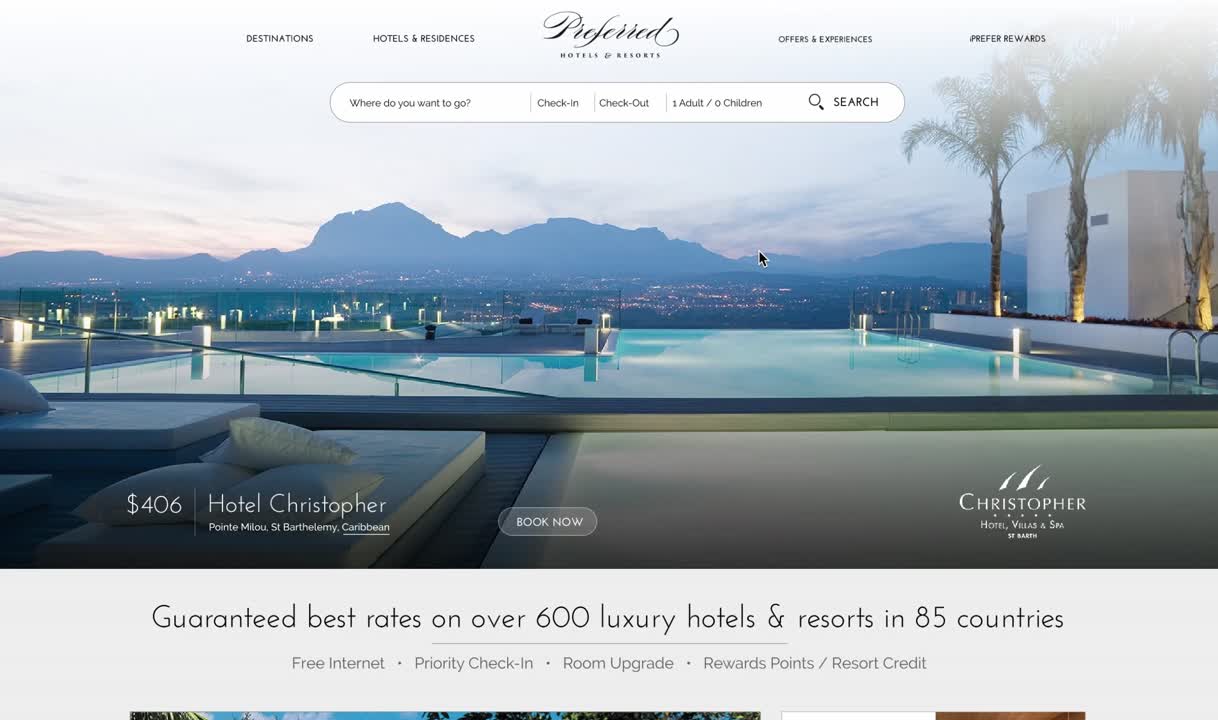
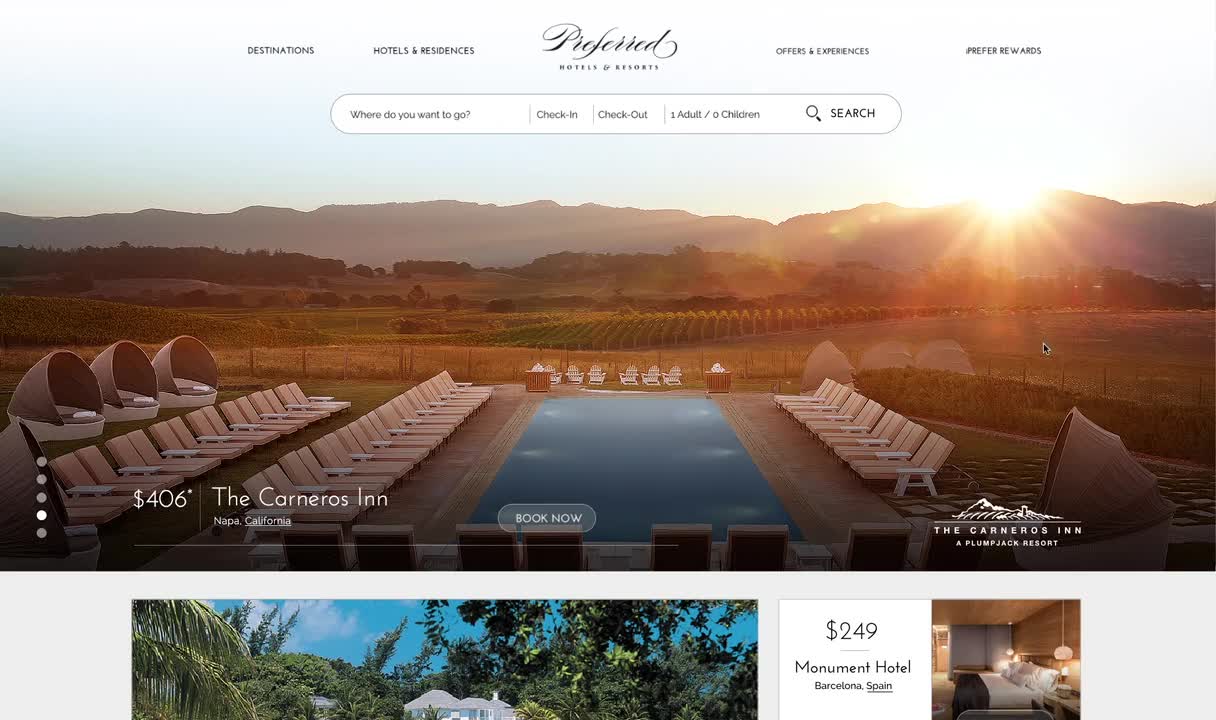
PHG homepage scrolled in-situ
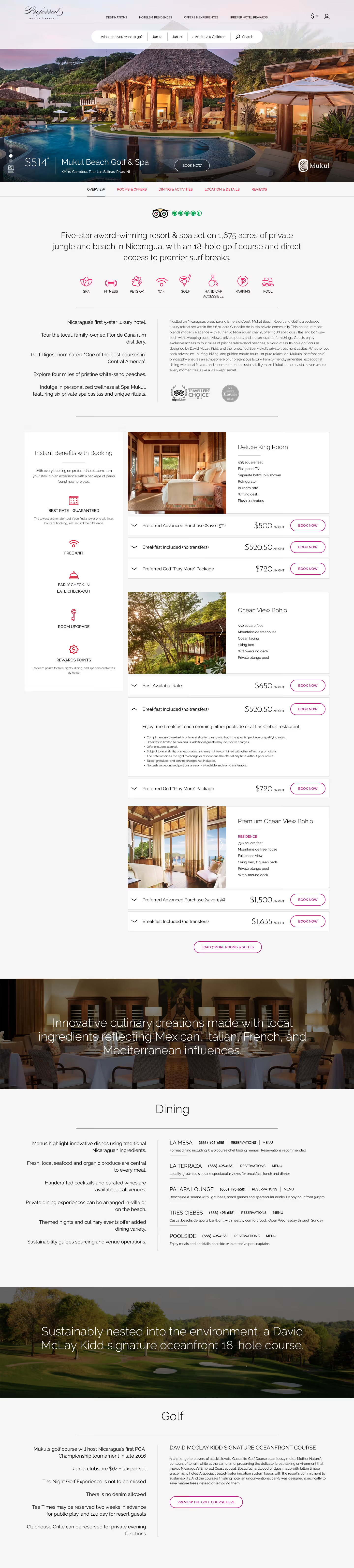
PHG Property Details in-situ
Facilitate inspiration
Inspire with imagery
Promote discovery
Allow people to find experiences and be inspired by the act of browsing and dreaming.  People might not know what they want yet.
Facilitate investigation
Inspire with scenarios
Promote sharing
Allow people to turn dreams into possibilities through stories.  Allow them to get others excited as well.  Give them high-level information.
Facilitate a deep dive
Inspire with details
Promote planning
Allow people to give structure to their ideas. Turn dreams into plans through detailed information.  Here is where price is most important.
Facilitate booking
Soothe with simplicity
Promote confidence
Towards the end of the life cycle, shoppers move to desktop for larger imagery, more details about the location and to make a purchase.  Remove any friction or fear.
DESIGN & METRICS

Homepage

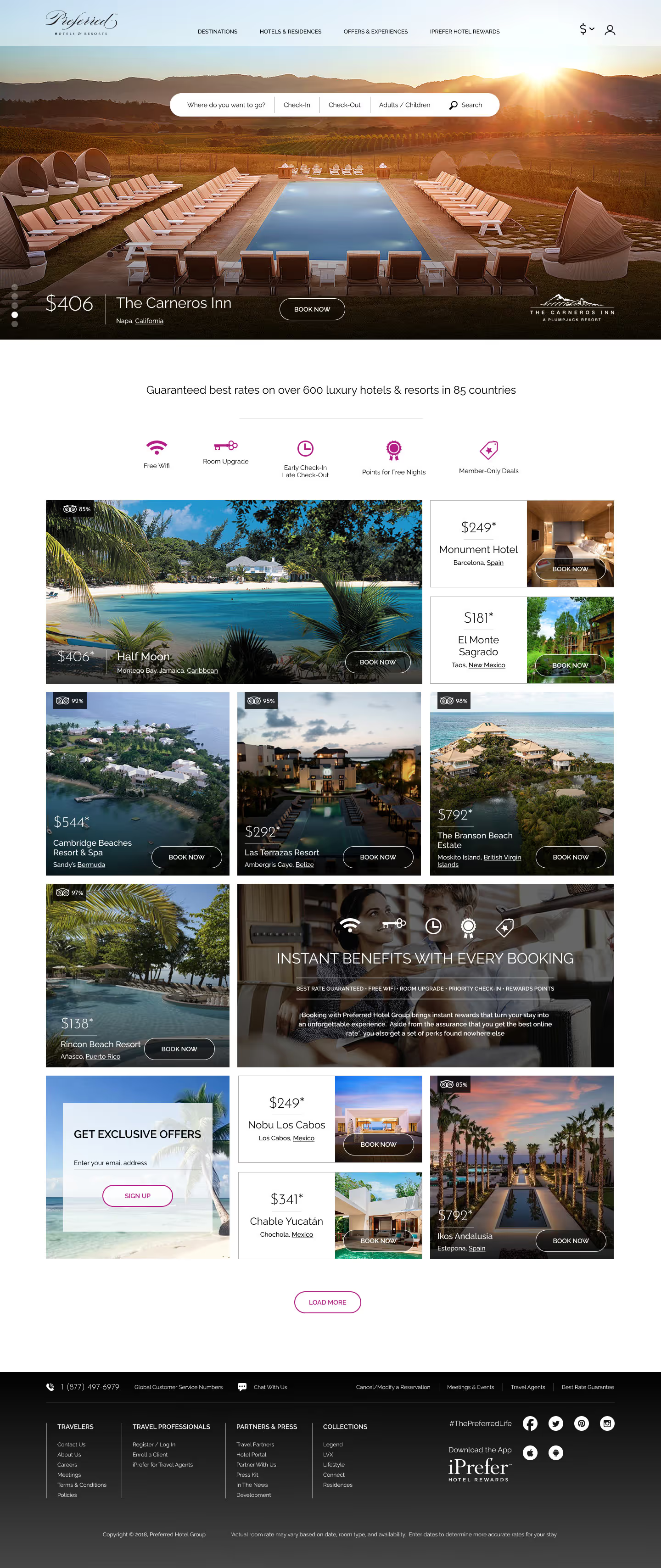
All versions of the homepage were optimized for their device.  The mobile prioritized browsing and discovery (through collections and destinations) whereas the desktop was focused toward search and conversion (prioritizing a mix of destinations and properties) .
Icon denoting an important metric
By optimizing the UX for what the user wants during the life cycle, we increased mobile engagement by 83%
scroll
Mobile webpage showing luxury hotel deals with sections for Paris, last minute escapes, ski & ride, spa retreats, and food & wine, plus listed hotel prices and benefits.
scroll
Luxury resort pool area at sunset with lounge chairs and cabanas at The Carneros Inn, Napa, California.

Prototyping

Luxury shoppers are highly engaged with pages that feature micro-interactions and engaging visuals so prototyping heavily featured animation and visual delight. . Not all of it got implemented but it was worth exploring.
Icon denoting an important metric
Animation and interactions are heavily involved in increased time on site and loyalty.

Property Details

The Property Details page was the most frequently entered page (via SEO).  Originally, there was little engagement as the copy was lengthy and difficult to read, and the various sections were split up into 5 different URLs per page.  For the redesign, the copy was completely rewritten for clarity & scalability, and the page was consolidated into one URL split with jump links that mimicked the structure of the 301 redirects.

Great pains were taken to bring forward room data and imagery outside of the Global Distribution System (GDS) which managed room availability.
Icon denoting an important metric
The Property Page was the first step in increasing conversion by 25%
scroll
Luxurious resort pool area with thatched-roof pavilion, lounge chairs, and surrounding tropical greenery at sunset.
scroll
Mukul Beach Golf & Spa resort pool area with thatched-roof cabanas and surrounding tropical greenery at sunset.

Checkout

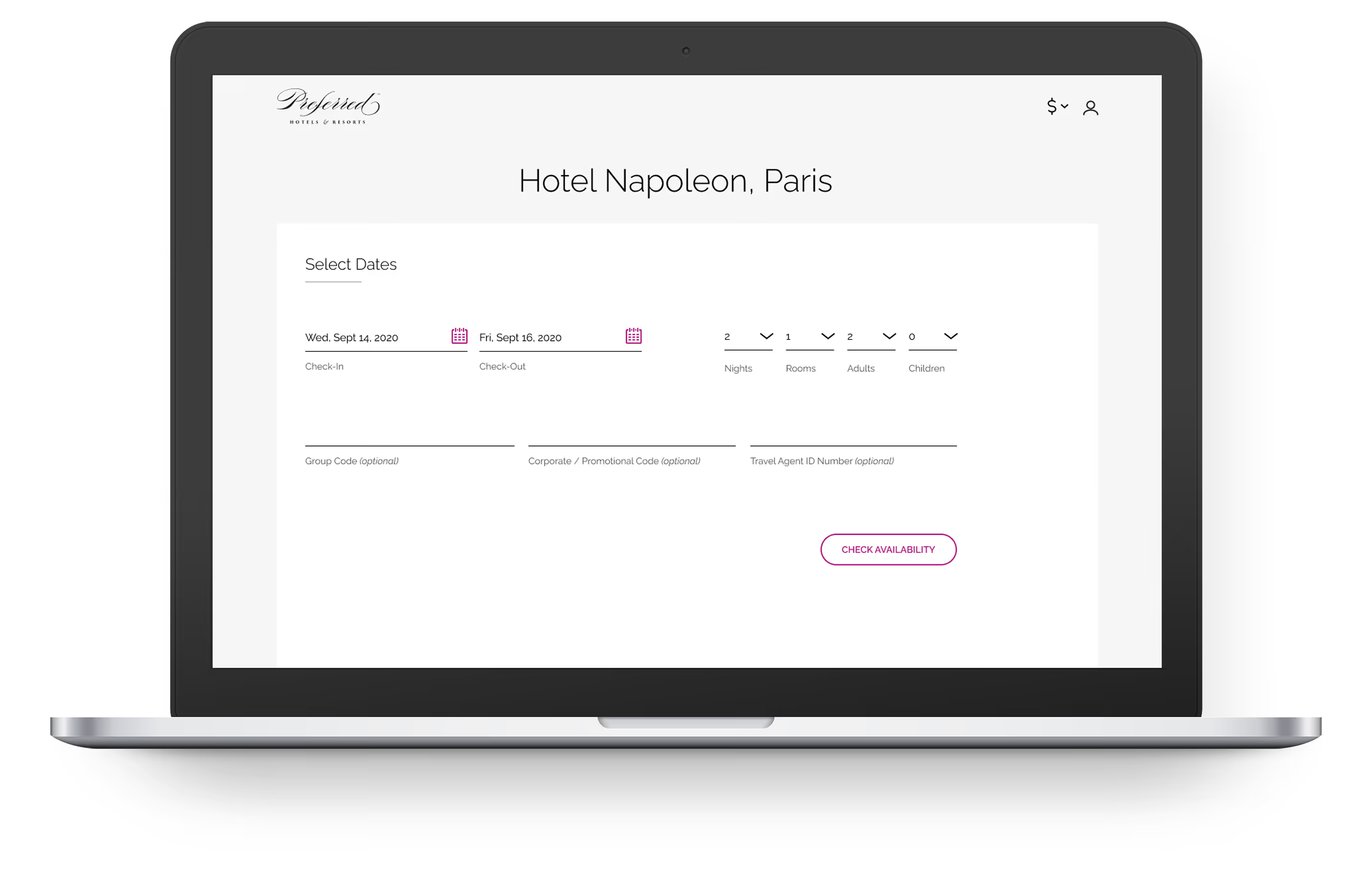
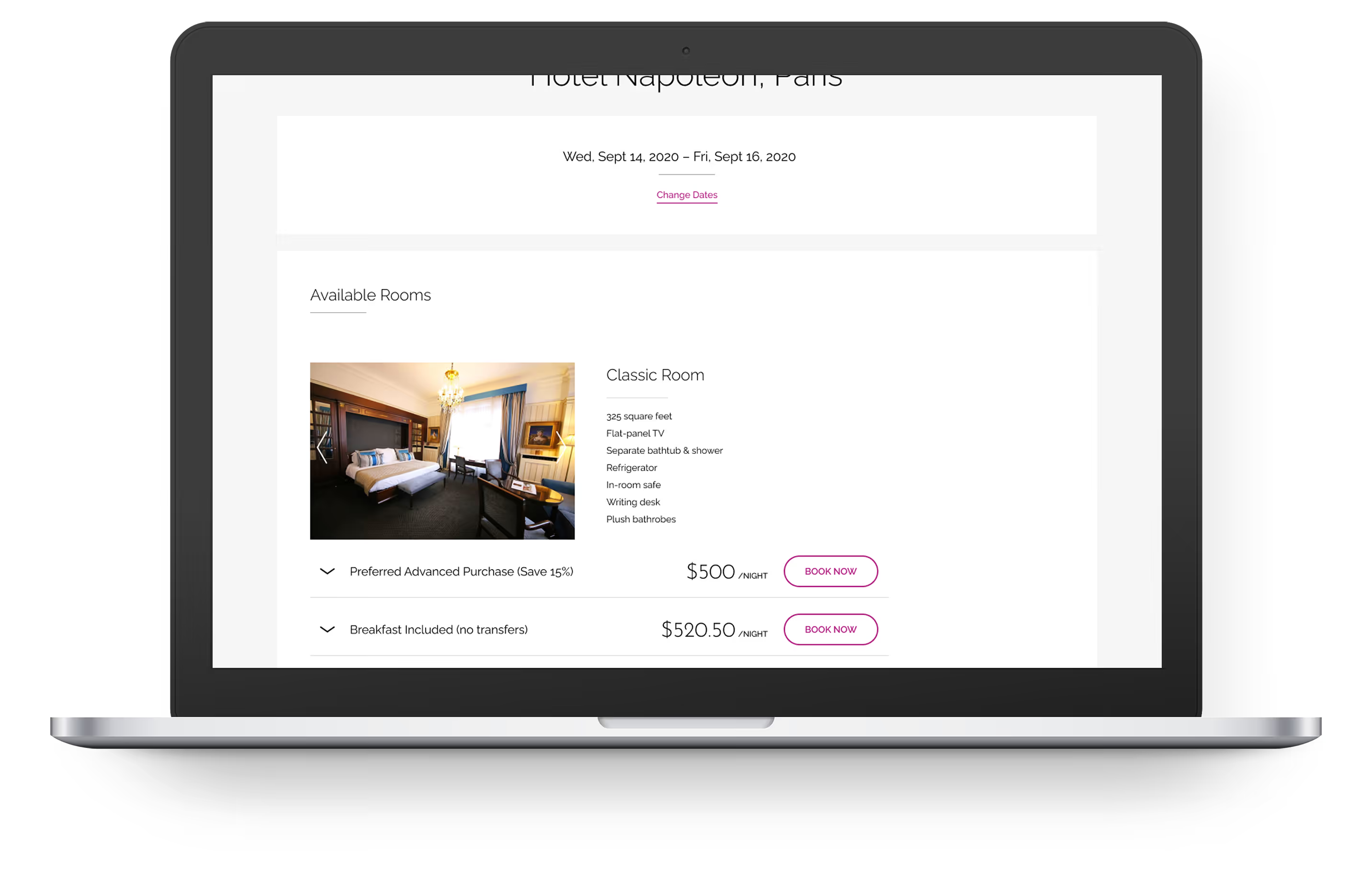
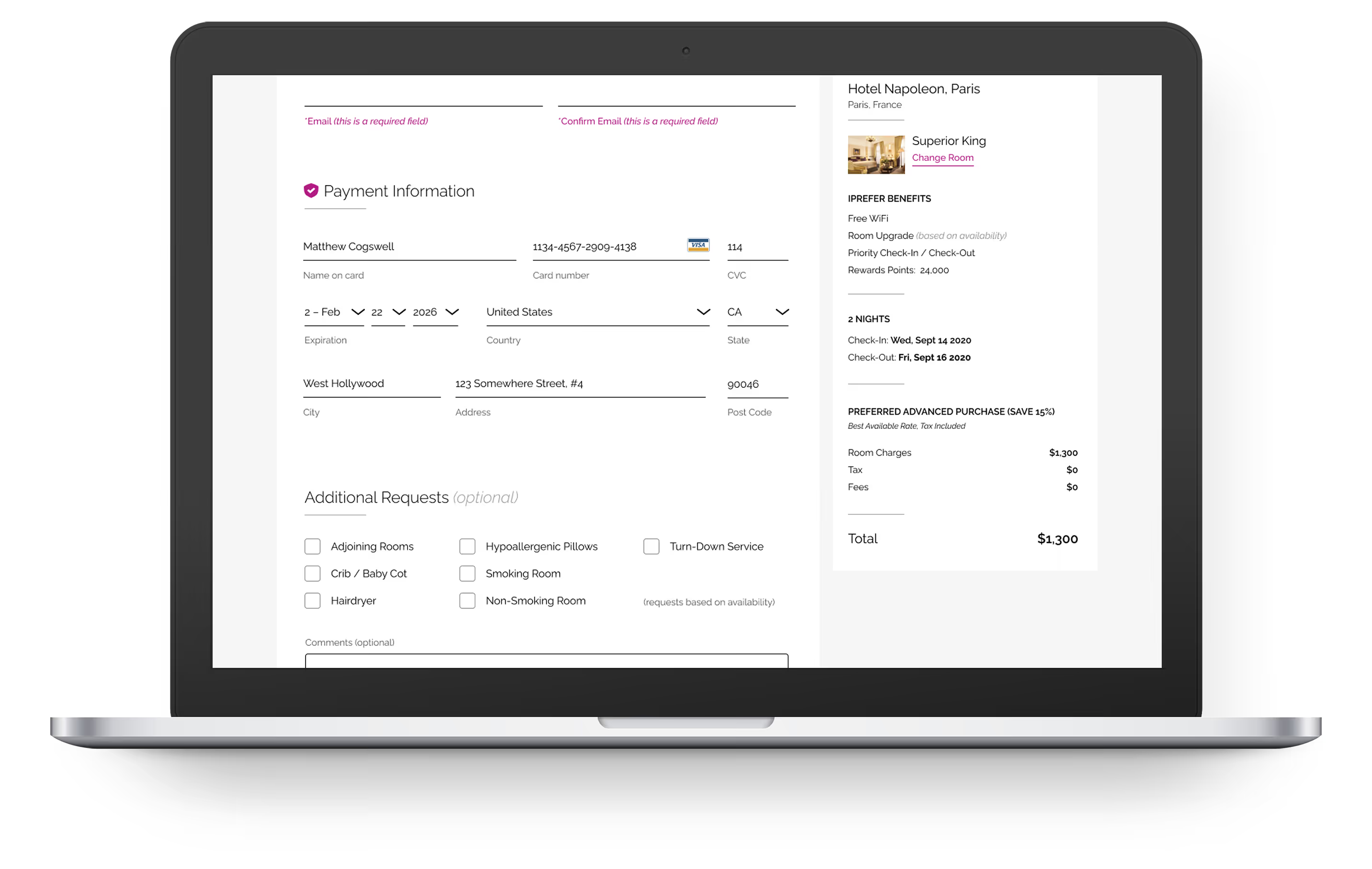
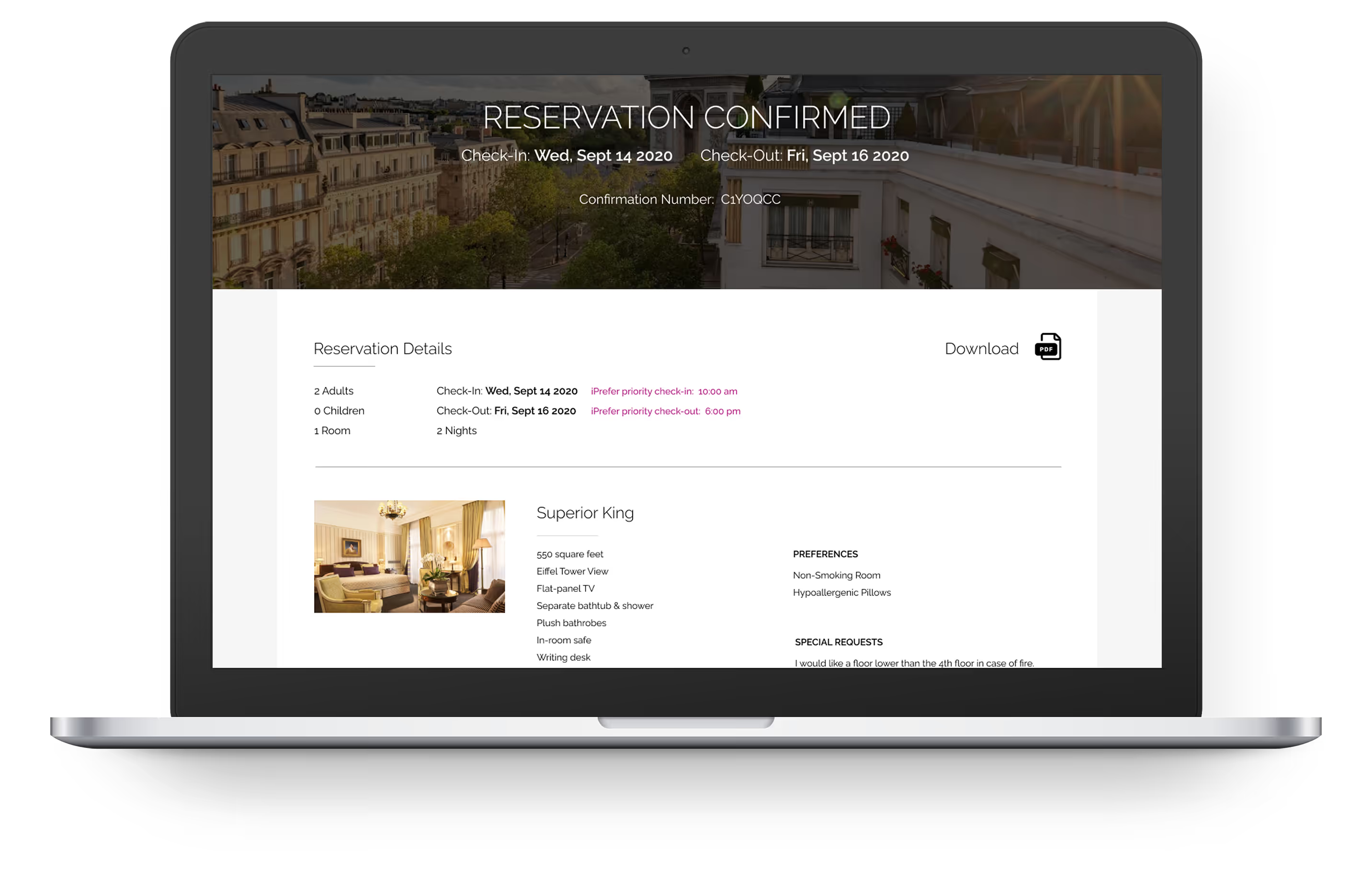
The checkout process needed to be completely redesigned.  It was simplified to four steps.   There were many restrictions as to what could and could not be done, as the system is powered by SABRE (the Global Distribution System) and SynXis (the Global Reservation System) and is neither hosted nor controlled by Preferred Hotels & Resorts so a strong collaboration was needed to maintain a consistent look and feel to reduce confusion.

Research showed that once in the checkout flow, removing the main nav items reduced “ADHD Bounce” and increased conversions by keeping consumers in the flow.  The redesign was made to be clear, easy to use, and inspire trust.
Icon denoting an important metric
Removing the nav helped decrease abandonment by 25%
Icon denoting an important metric
Adding a security badge significantly reduced bounce at the payment input
Laptop screen displaying a hotel booking page for Hotel Napoleon, Paris, with fields to select check-in and check-out dates, number of nights, rooms, adults, children, and optional codes, plus a 'Check Availability' button.Hotel booking page on laptop screen showing available Classic Room with a bed, desk, and chandelier, priced at $500 and $520.50 per night with booking options.Laptop displaying a hotel booking payment form including cardholder name, card number, expiration date, country, state, city, address, postal code, additional requests, and booking summary for Hotel Napoleon in Paris.Laptop screen showing a hotel reservation confirmation for a Superior King room with check-in on Wed, Sept 14, 2020, check-out on Fri, Sept 16, 2020, including guest and room details.
RESULTS

Outcome

By strategically implementing UX targeting, we were able to increase mobile engagement by 83% reducing page bounce and leading to higher conversions.  The cart checkout redesign reduced abandonment by 25% demonstrating how attentive UX and UI design can strengthen business goals.  

Achievements

Average Order Value
up 10%
Mobile Engagement
up 83%
Traffic
up 33%
Cart Abandonment
down 25%
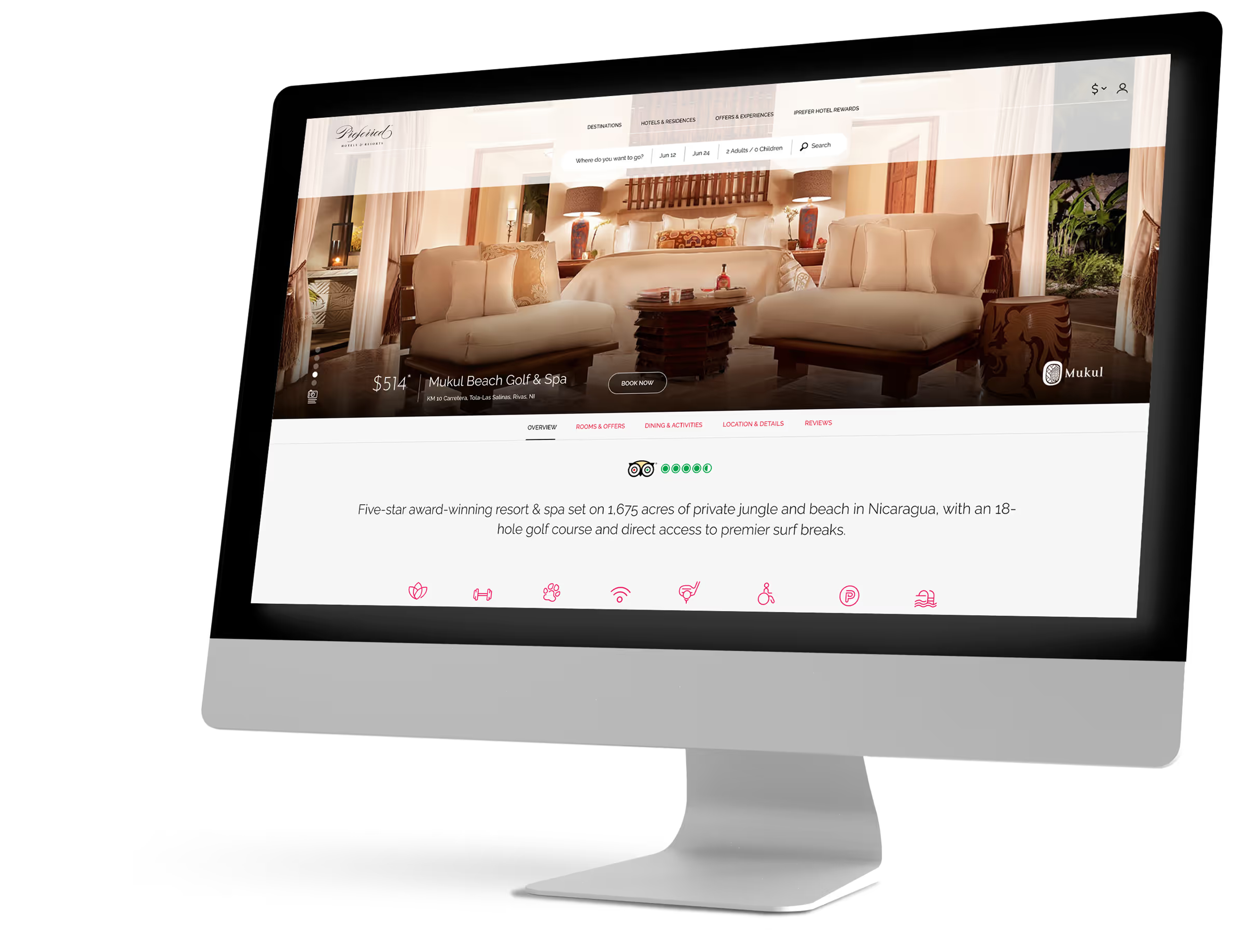
Desktop computer showing a hotel booking website for Mukul Beach Golf & Spa with a photo of a luxurious lounge area.
SAAS
Person holding a smartphone displaying a purple app screen with a glowing wave pattern and a quote text.
Solving Conversational Anxiety trough ethical AI.
VIEW CASE study
E-COMMERCE
Smartphone screen showing a food delivery app with an order status reading 'Your Order Is At Your Door' and an estimated arrival time of 5:20 PM.
Increasing transactions for Taco Bell by 148%
VIEW CASE study